You did your time with breakouts as a teenager — so why is acne back in your 30s or 40s? Adult acne is far more common than most people realize, especially in women, and it rarely responds to the same products that worked (or didn’t) in high school. Here’s why adult acne behaves differently, and what treatments actually clear it.
Why Adult Acne Is Different
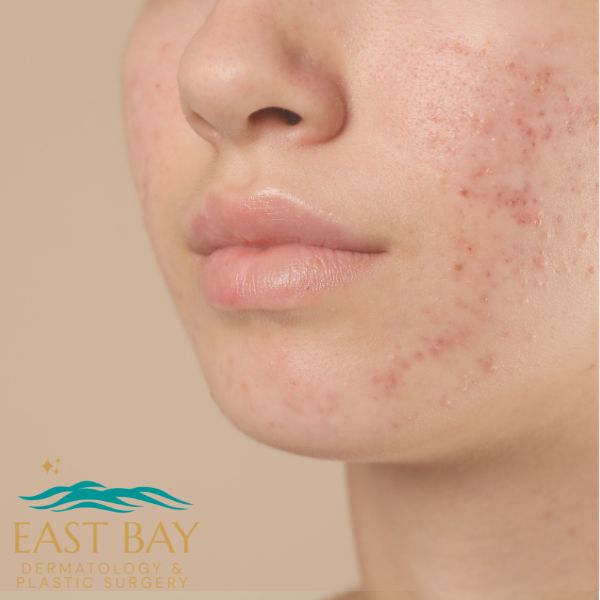
Teen acne is driven mostly by the surge in oil production during puberty, and it tends to scatter across the forehead, nose, and cheeks. Adult acne usually looks different: deeper, more inflamed bumps concentrated along the jawline, chin, and lower face. It’s also more likely to be hormonal — flaring before menstrual cycles, during pregnancy, around perimenopause, or after stopping birth control. Stress, certain medications, and even friction from masks or phone screens can all contribute.
Adult skin is different too. It’s thinner, drier, and slower to heal, which means the harsh, drying products marketed to teenagers often irritate adult skin without clearing it — and adult breakouts are more likely to leave dark marks and scars behind.
First, Make Sure It’s Actually Acne
Not every red bump on adult skin is a pimple. Rosacea, folliculitis, and perioral dermatitis are all routinely mistaken for acne, and treating the wrong condition can make things significantly worse. This kind of mix-up is common with chronic skin conditions — it’s the same reason so many patients confuse eczema and psoriasis. If your “acne” hasn’t budged after months of treatment, the diagnosis is the first thing a dermatologist will revisit.
Why Drugstore Products Fall Short
Over-the-counter benzoyl peroxide and salicylic acid have their place, and for occasional mild breakouts they may be enough. But adult acne — particularly hormonal acne — starts deeper than these surface-level products can reach. If you’ve been cycling through cleansers and spot treatments for more than two or three months without real improvement, more of the same isn’t the answer. According to the American Academy of Dermatology, persistent adult acne warrants a dermatologist’s evaluation, since prescription therapy is often what finally breaks the cycle.
What Actually Works for Adult Acne
Prescription Topicals
Prescription-strength retinoids remain the backbone of most acne treatment plans — they unclog pores, speed cell turnover, and improve the texture and discoloration that adult breakouts leave behind. Your dermatologist may pair them with topical antibiotics or other prescription formulas suited to adult skin, which tolerates gentler, more targeted regimens better than aggressive teenage routines.
Oral Medications
When acne is hormonal or widespread, oral therapy often makes the biggest difference. Depending on your situation, that may mean a short course of oral antibiotics to calm inflammation, hormone-targeting medication for cyclical jawline breakouts, or other systemic options for severe, scarring acne. These are decisions made with your provider based on your health history — which is exactly why they outperform anything on a store shelf.
In-Office Treatments
Prescriptions work faster and better when paired with professional care. At East Bay Dermatology, that includes chemical peels to clear congested pores and fade post-acne marks, AviClear — the first FDA-cleared laser that treats acne at its source by targeting the oil glands themselves — and safe, sterile extractions that don’t traumatize the skin the way at-home picking does. You can explore these options on our medspa in Bellmore page. For the scars and texture changes older breakouts leave behind, microneedling stimulates collagen to smooth the skin’s surface over time.
When to See a Dermatologist
See a dermatologist if your breakouts are painful or cystic, if they’re leaving marks or scars, if they flare in a hormonal pattern, or if over-the-counter products haven’t worked after a few months of consistent use. Adult acne is highly treatable — but the right plan depends on the right diagnosis. Our board-certified team provides personalized acne treatment in Bellmore for patients across Nassau County, with plans built around your skin, your hormones, and your history. Schedule a consultation today at (516) 308-7070.
FAQ: Adult Acne
Why am I getting acne in my 30s or 40s?
Hormonal shifts are the most common driver — menstrual cycles, pregnancy, perimenopause, and stopping or starting birth control can all trigger adult breakouts. Stress, genetics, certain medications, and comedogenic skincare products also play a role.
Does hormonal acne go away on its own?
Not usually. Because it’s tied to internal hormone fluctuations rather than surface bacteria alone, hormonal acne tends to persist or recur until it’s treated at the source, often with prescription therapy guided by a dermatologist.
What is AviClear and does it work for adult acne?
AviClear is an FDA-cleared laser treatment that targets the overactive oil glands responsible for acne. Delivered over a series of three quick sessions, it’s an effective option for adults whose acne hasn’t responded to traditional treatments, including those who want results without ongoing medication.
Can adult acne scars be treated?
Yes. Treatments such as microneedling, chemical peels, and laser resurfacing can significantly improve acne scarring and post-inflammatory discoloration, especially once active breakouts are under control.