Schedule a dermatology appointment if a mole changes in size, shape, or color, looks different from your other moles, or begins to itch or bleed. When you call, describe what you’ve noticed so the office can help you schedule an evaluation.
What Changes in a Mole Should You Look For?
The ABCDE guide can help you describe a mole or spot you’re concerned about: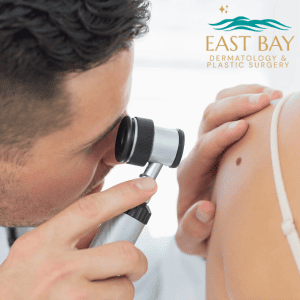
- A — Asymmetry: One half of the spot looks different from the other.
- B — Border: The edges look uneven, jagged, or blurred.
- C — Color: The spot has several shades or has changed color.
- D — Diameter: Melanomas are often larger than 6 millimeters when diagnosed, although they can be smaller.
- E — Evolving: The spot changes in size, shape, or color, or starts to look different from your other moles.
The American Academy of Dermatology’s ABCDE guide includes photos that illustrate these warning signs. Even a small mole should be checked if it’s changing, itching, or bleeding.
What to Expect When a Dermatologist Checks a Mole
During a medical dermatology visit at East Bay Dermatology & Plastic Surgery, your dermatologist will ask which spot concerns you, when you first noticed it, and how it has changed. Your personal or family history of skin cancer and your history of sun exposure can also help guide the exam.
Your dermatologist may use a dermatoscope, a handheld tool that magnifies and lights the skin, to look at the spot more closely. If the area needs further evaluation, your dermatologist may recommend a biopsy. This involves taking a small sample of skin for laboratory analysis. Your care team will review the results with you and explain any next steps.
Frequently Asked Questions About Mole Checks
Schedule a Mole Check on Long Island
If you’ve noticed a new or changing mole, call East Bay Dermatology & Plastic Surgery at (516) 308-7070 or request an appointment online. Mention the spot you’d like checked and tell us which office you prefer so our team can confirm availability.