Why Dermatologists Recommend a Yearly Skin Exam
Skin cancer is the most common cancer in the United States, and Long Island’s beach-heavy summers give Nassau County residents more cumulative sun exposure than most. The reason screening matters so much comes down to timing: nearly all skin cancers — including melanoma, the most dangerous form — are highly treatable when found early. The American Academy of Dermatology encourages adults to have their skin checked regularly and to perform monthly self-exams, because the difference between an early and a late diagnosis is often nothing more than someone looking.
A trained dermatologist also sees what you can’t. Skin cancers frequently develop on the scalp, the back, behind the ears, and other places you’ll never spot in a mirror — and early lesions rarely hurt, itch, or announce themselves.
What Happens During an Annual Skin Exam
A Brief History
Your provider starts by asking about your sun exposure, tanning history, family history of skin cancer, and any spots you’ve noticed changing. If you’ve photographed a mole you’re unsure about, this is the time to show it.
The Full-Body Examination
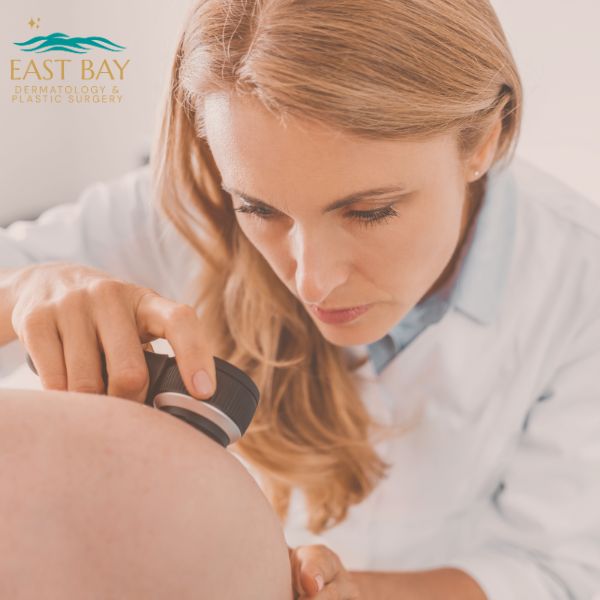
You’ll change into a gown, and your dermatologist will systematically examine your skin from scalp to soles — including easy-to-miss areas like between the toes, under the nails, and behind the ears. The exam is visual and painless. For a closer look at any spot, your provider may use a dermatoscope, a small handheld magnifier that reveals structures beneath the skin’s surface that the naked eye can’t see.
If Something Looks Suspicious
Most flagged spots turn out to be harmless, but if a lesion warrants a closer look, your provider may recommend a quick biopsy — a small sample taken under local anesthetic, usually in the same visit. You’ll get a personal call with your results, not an automated message, and a clear plan if anything needs treatment.
How to Prepare for Your Appointment
Arrive with clean, product-free skin: no makeup, nail polish, or heavy lotions, since these can hide the very spots your dermatologist needs to see. Wear your hair loose so your scalp can be checked, and jot down any moles or patches you’ve been wondering about so nothing gets forgotten in the moment.
Do Some People Need More Than One Exam a Year?
Yes. If you have a personal or family history of skin cancer, many atypical moles, fair skin that burns easily, a history of blistering sunburns or tanning bed use, or a weakened immune system, your dermatologist may recommend screenings every three to six months instead of annually. Your exam schedule gets set based on your individual risk — one more reason the first appointment matters.
What to Do Between Annual Exams
Your yearly screening works best paired with monthly self-checks at home. Knowing what to look for is the key — our guide to the ABCDEs of melanoma walks through the five warning signs that mean a mole deserves professional attention. If you spot any of them, don’t wait for your next annual visit.
Schedule Your Annual Skin Exam in Nassau County
East Bay Dermatology & Plastic Surgery provides annual skin screenings in Bellmore for patients throughout Nassau County, with thorough full-body exams performed by our board-certified team. If a screening ever finds something that needs care, our practice also provides complete skin cancer treatment for Merrick and surrounding communities — diagnosis and treatment under one roof. Call (516) 308-7070 or book online to schedule your exam.
FAQ: Annual Skin Exams
How long does an annual skin exam take?
Most full-body skin exams take about 15 to 20 minutes. If a biopsy is needed, it typically adds only a few minutes to the visit.
Does a skin exam hurt?
No. The exam itself is entirely visual and painless. If a biopsy is recommended, the area is numbed with local anesthetic first, so you’ll feel little more than a pinch.
At what age should I start getting annual skin exams?
There’s no single starting age — adults of all ages benefit, and anyone with significant sun exposure, fair skin, or a family history of skin cancer should start sooner rather than later. Ask your dermatologist what schedule fits your risk level.
Are annual skin exams covered by insurance?
Skin exams are often covered as medical dermatology visits, though coverage varies by plan. Contact our office and we’ll help you verify your specific benefits before your appointment.